Home › Kilimanjaro › Rongai
The Roof of Africa · 5,895m
Rongai
The only route that climbs Kilimanjaro from the north, near the Kenyan border. The driest trail on the mountain, the least traffic of any route, and the best option in the rainy shoulder months.
- Driest route
- Almost no crowds
- Best in shoulder season
Tanzanian-Owned Operator
Fair Porter Treatment
Based In Arusha & Moshi
Book Direct, No Middlemen
Why people choose it
WILDERNESS,
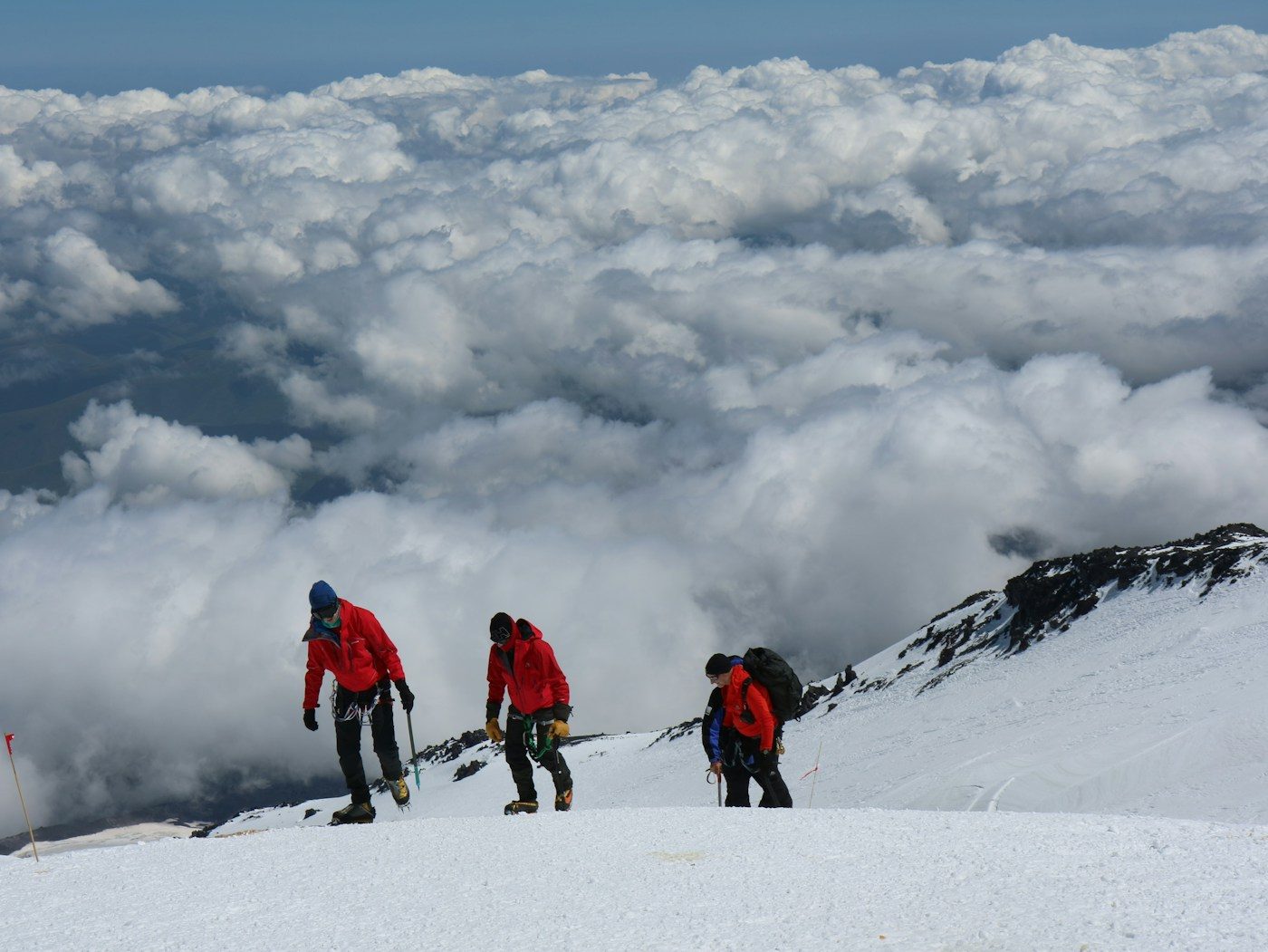
Everything else starts on the southern side. Rongai comes in from the north, through country that sees a fraction of the traffic — you can walk an entire day and pass two or three other groups.
It also sits in Kibo’s rain shadow, which makes it markedly drier. If your only free window falls in April, May or November, Rongai is the route we recommend.
- The only approach from the northern, Kenyan side
- Sits in the rain shadow — the driest trail on Kilimanjaro
- Descends by Marangu, so you see two completely different sides
Day by day
THE ITINERARY
Altitudes, distances and walking hours for every day on the mountain.
Price from
On request
per person, private group
7 Days
On the mountain
1
Nalemoru Gate to Simba Camp
A long scenic drive round the base of the mountain to the northern gate, then a gentle afternoon climb through farmland and pine forest.
- 1,950m to 2,625m
- 8km
- 3-4 hrs
2
Simba Camp to Kikelewa Caves
Steady climbing across open moorland with Kibo directly ahead and the jagged spire of Mawenzi coming into view.
- 2,625m to 3,600m
- 9km
- 6-7 hrs
3
Kikelewa Caves to Mawenzi Tarn
A short steep climb to a camp set in a cirque beneath the shattered spires of Mawenzi. The most dramatic campsite on the mountain.
- 3,600m to 4,330m
- 6km
- 3-4 hrs
4
Acclimatisation day at Mawenzi Tarn
A half-day walk up towards Mawenzi’s lower slopes, then back down to sleep at the same altitude. The reason this route summits 95%.
- 4,330m
- Half day
- Climb high, sleep low
5
Mawenzi Tarn to Kibo Huts
Cross the saddle, a lunar expanse of alpine desert between the two peaks, to Kibo Huts at the foot of the summit cone.
- 4,330m to 4,700m
- 9km
- 5-6 hrs
6
Summit Night: Kibo to Uhuru Peak, down to Horombo
Up at 23:00 and onto the scree towards Gilman’s Point, then round the crater rim to Uhuru at 5,895m as the sun comes up.
- 5,895m summit
- 22km
- 12-15 hrs
7
Horombo to Marangu Gate, back to Arusha
A final descent on the Marangu side — a completely different landscape from the one you walked up.
- 3,720m to 1,860m
- 20km
- 5-6 hrs
No surprises
WHAT'S IN,
Included
- All park gate, camping and rescue fees
- WFR-certified lead guide, assistant guides, cook and porters
- Three hot meals a day, cooked fresh at camp
- Four-season tents, sleeping mat and heated dining tent
- Twice-daily pulse-oximeter checks and emergency oxygen
- Airport transfers plus two nights' hotel in Arusha
- Filtered drinking water and a summit certificate
Not included
- International flights and Tanzania visa
- Travel and high-altitude medical insurance
- Personal trekking gear — rentals from $10 in Moshi
- Crew tips, budgeted together at your briefing
- Drinks, snacks and souvenirs
- Anything not listed under Included
Safety assured
THE MOUNTAIN IS SERIOUS.
Twice-Daily Health Checks
Pulse-oximeter and lung checks every morning and evening, logged by your guide.
Emergency Oxygen
Portable oxygen and a full first-aid kit travel with the crew from gate to summit.
WFR-Certified Guides
Every lead guide holds a current Wilderness First Responder certificate.
Four-Season Camps
Weatherproof tents, insulated mats and a heated dining tent at every camp.
Before you ask
STRAIGHT ANSWERS
How cold does it get on summit night?
Expect −10°C to −20°C at Uhuru Peak with wind chill. A −10°C-rated down jacket, thermal base layers, warm gloves and a balaclava are not optional. All of it can be hired in Moshi.
What is the food like on the mountain?
Three cooked meals a day prepared fresh at camp by our own cook. Vegetarian, vegan, halal and gluten-free are all straightforward — tell us when you book.
How heavy is my daypack?
Porters carry your main duffel, capped at 15kg. You carry a 25–30L daypack with water, snacks, a rain shell, a warm layer and a camera — usually 5–7kg.
Will there be phone signal and charging?
Signal is patchy but present on most of the mountain. There is no mains power, so bring a power bank and sleep with it in your sleeping bag — cold drains batteries fast.
Rongai Route
YOUR WINDOW IS
Send your dates and group size. We confirm availability, send a full kit list and hold your place with a $200 deposit.